
Think of Company Culture as an Operating System
How leaders can move beyond perks and slogans to build a culture that shapes behavior, supports strategy, and improves performance.
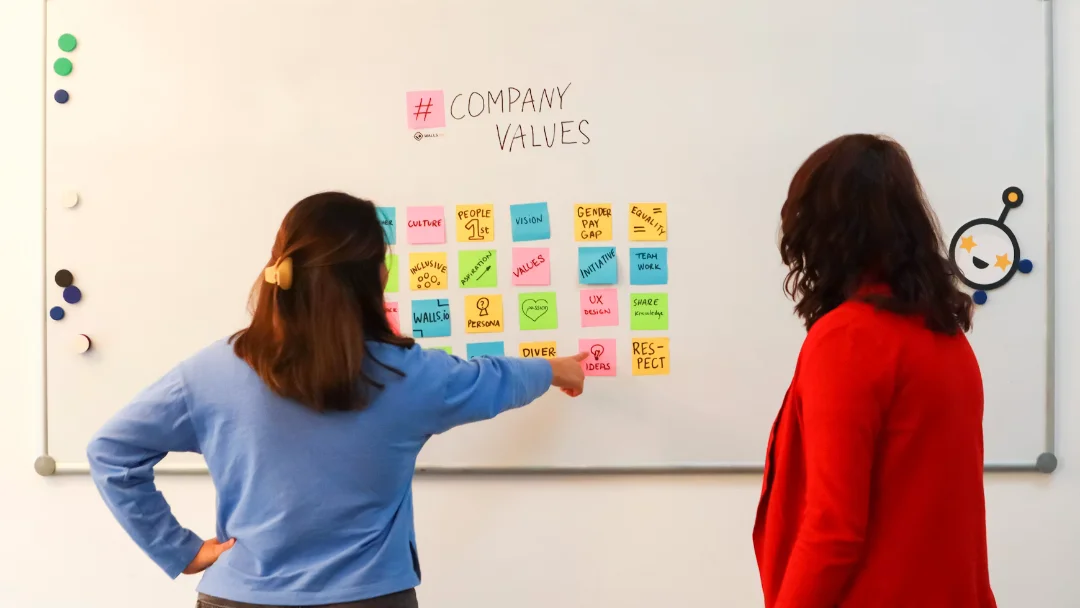
Culture is often discussed as if it lives in the soft parts of work: the mood of the office, the friendliness of the team, the quality of the snacks, the language in the values deck. Those things may signal something about a workplace, but they are not culture itself.
A stronger way to think about culture is as an operating system. It tells people what matters, how decisions get made, which behaviors are rewarded, and what the organization will not tolerate. When it works, people do not need constant instruction because the system has already shaped their judgment.
That is the more useful lesson from Stanford Graduate School of Business professor Glenn Carroll and UC Berkeley Haas dean Jennifer Chatman, whose work argues that culture is not a decorative layer around the business. It is a management tool.
The practical question is not "Do people like working here?" It is "Does the culture make the strategy easier to execute?"
The Old Culture Conversation Is Too Small
Many leaders already know their culture needs attention. In the Stanford article, Carroll says that when he speaks with managers about organizational culture, roughly 80% say it needs to change. The problem is that leaders often reach for familiar but limited tools: values alignment, communications, workshops, and training.
Those tools can help. But if culture is the organization's operating system, then a slide deck is not enough. Leaders have to redesign the signals, routines, incentives, and consequences that teach people how to behave.
Culture Is Not Soft
Calling culture "soft" makes it sound optional. Carroll and Chatman make the opposite case. Culture is a form of social control. It gets people aligned around shared norms and pushes them toward certain behaviors, even when no manager is in the room.
That has a harder edge than perks or team-building. A strong culture clarifies what the organization values, rewards people who move with it, and creates consequences for those who consistently work against it. This is why culture can influence the bottom line: it shapes the behavior that produces the bottom line.
The Five Beliefs Leaders Need to Recheck
The Stanford piece points to a larger theme in Carroll and Chatman's book: leaders often inherit popular beliefs about culture that are only partly true, or simply wrong. Reframed for a management audience, the main shifts look like this:
| Common belief | Better framing |
|---|---|
| Culture is about making work nice | Culture is about aligning behavior with strategy |
| Culture is too vague to manage | Culture can be shaped through deliberate systems and repeated signals |
| Culture does not affect performance | Culture affects decisions, execution, retention, and risk |
| Cultural fit means hiring similar people | Fit should be judged against the culture the strategy now requires |
| Culture change happens through messaging | Culture change happens when messaging, incentives, routines, and consequences agree |
The pattern is clear: culture becomes powerful when it moves from language to behavior.
Culture Must Follow Strategy
One of the more useful ideas in the article is that "fit" should not mean preserving the current culture forever. If the strategy changes, the culture may need to change with it.
That means leaders should be careful with cultural fit. Hiring only people who match today's norms can protect what already exists, but it can also freeze the company in place. If the next strategy requires more risk-taking, faster collaboration, deeper customer focus, or stronger operational discipline, the organization may need people who do not fit the old pattern.
This is where leaders often get stuck. They announce a new strategy but keep rewarding the old behavior. Employees notice the mismatch quickly. The real culture is not what leaders say after an offsite. It is what the organization repeatedly rewards.
Culture Change Is Behavioral, Not Just Intellectual
Carroll's point in the Stanford interview is blunt: the concept is not the hard part. The hard part is behavioral consistency.
Leaders have to repeat the same message, make the same tradeoffs, and reinforce the same expectations again and again. This can feel repetitive from the top, but repetition is how the organization learns what is real.
The phrase "relentless and boring" appears in the article as a way to describe the work of strong management. That is the part many leaders underestimate. Culture change is rarely dramatic in the day-to-day. It is built through small, consistent signals that accumulate until people no longer need to ask what matters.
Overlooked Culture Tools
The article also highlights practical tools that leaders often overlook. Two stand out because they shape culture through experience rather than messaging.
Onboarding as a culture test
Assigning employees to onboard others does more than help new joiners. It forces the person doing the onboarding to understand, explain, and embody the culture. Teaching the culture strengthens their own commitment to it.
Job rotation as cultural glue
Moving people across functions or business areas helps them see how the organization works beyond their immediate team. It builds shared understanding, broadens relationships, and reduces the risk that each department develops its own isolated version of the culture.
The Leader's Culture Checklist
If culture is an operating system, leaders should inspect it the way they would inspect any business-critical system.
- Strategy alignment: What behaviors does the current strategy require?
- Norm clarity: Can employees explain what is valued here without reading a values page?
- Decision evidence: Do recent decisions reinforce the culture leaders claim to want?
- Reward consistency: Are promotions, recognition, and compensation supporting the desired behavior?
- Contradiction control: What behaviors are tolerated even though they undermine the stated culture?
- Transmission: How are new employees actually learning the culture?
- Adaptability: Is the culture helping the next strategy, or protecting the last one?
A Better Definition of Great Culture
A great culture is not simply a pleasant place to work. It is a system that makes the right behaviors easier, the wrong behaviors harder, and the company's strategy more executable.
That does not mean kindness, trust, flexibility, or employee experience are unimportant. They matter. But they matter most when they support the work the organization is trying to do.
The better question for leaders is not whether the company has a "good vibe." The better question is whether the culture helps people make better decisions when nobody is watching.
Final Thought
Culture is not a poster, a perk, or a personality trait. It is the pattern of behavior an organization teaches, rewards, repeats, and protects.
If leaders want to change culture, they have to work on the system: what gets praised, what gets promoted, what gets corrected, what gets ignored, and what gets repeated until it becomes normal.
That is what makes culture difficult. It is also what makes it powerful.
Inspired by Stanford Graduate School of Business, "Great Company Culture Is More Than Creating a Nice Place to Work", by Sachin Waikar.