
AI Can Solve Math Problems. Can It Replace Mathematicians?
An examination of why human judgment remains central to pure mathematics in the age of artificial intelligence.
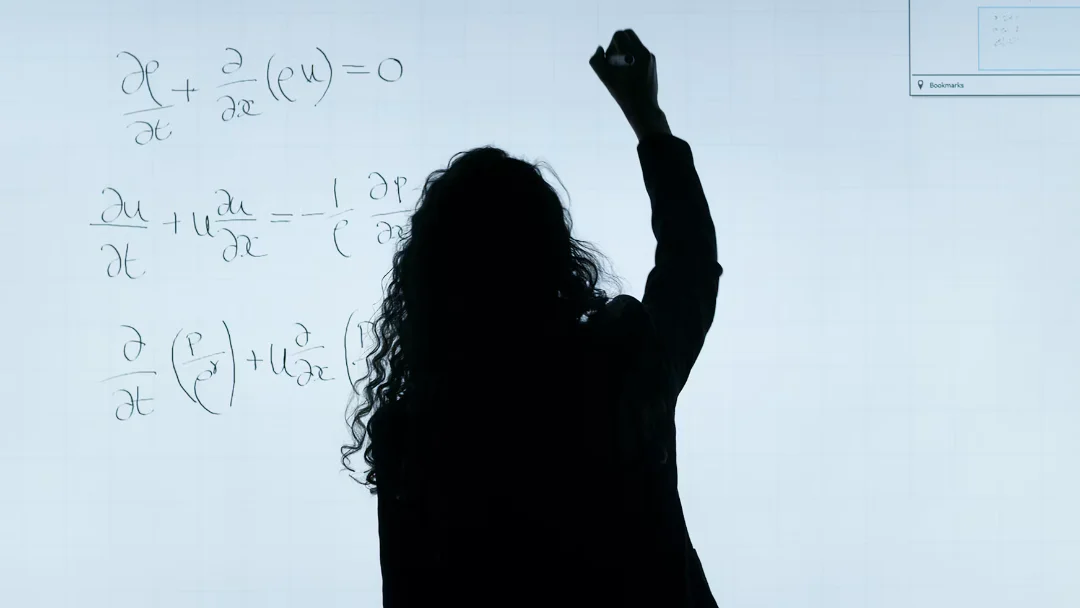
Recent reports of AI systems resolving open mathematical problems have prompted a broader question: whether human-led research in pure mathematics remains necessary. This view rests on a misunderstanding of both the nature of mathematics and the capabilities of AI. History offers a useful precedent. The introduction of Mathematica in 1988 prompted similar predictions that mathematics would be made obsolete, yet the tool instead raised the level at which mathematics could be practiced.
The Role of AI in Mathematical Research
AI is a valuable research instrument. Its principal strength lies in drawing on the accumulated literature of human mathematics. Having been trained on millions of papers and books, large language models can identify non-obvious connections between results and cheaply test many combinations. However, this capacity is fundamentally derivative: it leverages existing human knowledge rather than producing genuinely new foundations.
Limitations
Three principal constraints stand out.
- Reliability. Mathematical arguments must be correct in a way that prose need not be. Because LLMs operate statistically, the probability of error increases with the length and complexity of an argument.
- Verification. Autoformalization, the automatic translation of informal mathematics into a form checkable by a proof assistant, is vulnerable to a subtle failure. A system may prove a statement that differs from the one intended while reporting success. Formal proofs are typically so low-level and verbose that such discrepancies are difficult for humans to detect.
- Interpretability. Computation and AI can generate unlimited new theorems and concepts. Without a connection to existing human concepts, however, most of these would appear "alien" and fall outside what mathematicians would recognize as mathematics.
The Primacy of Goal-Setting
Mathematics is defined less by its answers than by its questions. AI can assist in achieving goals once they are specified, but the goals themselves originate outside the system. Choosing which structures and concepts to pursue depends on aesthetic judgment, historical context and community consensus. New concepts also require social adoption to become useful, much as new words must be shared to function in a language. Notably, the most significant AI successes in mathematics to date have come largely from highly skilled human mathematicians.
Toward Human-Readable Formalization
As a partial remedy, mathematical statements can be expressed in a precise computational language that humans can also read. Within such a framework, an AI's formalization can be inspected and corrected by a human rather than accepted on trust.
The Value of Pure Mathematics
Pure mathematics is not justified chiefly by eventual applications. Instead, it supplies conceptual frameworks from which science and technology later develop. Moreover, because of computational irreducibility, the field can never be exhausted: there will always be new facts and structures to discover.
Conclusion
The future of pure mathematics looks productive, with AI functioning as an accelerator rather than a substitute. Human curiosity, judgment and community remain essential to deciding what is worth knowing.
Source: Wolfram, S. (2026, September 28). What's the Future for Pure Math Research in the Age of AI? Stephen Wolfram Writings. https://writings.stephenwolfram.com/2026/09/whats-the-future-for-pure-math-research-in-the-age-of-ai/